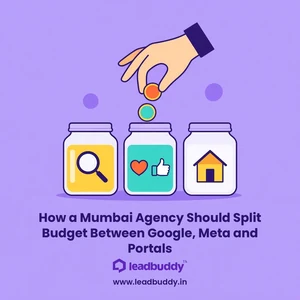
Budget split between Google Ads, Meta ads and property portals for a Mumbai real estate project
"How much should we put on Google, how much on Meta, and do we still need the portals?"
It's one of the first questions developers ask us. And honestly, anyone who gives you a fixed answer before knowing your project is guessing. The right split depends on who's buying, where they are in their search and what's already working for you.
That said, there's a sensible way to think about it. Here's ours.
What is each channel good at?
Google Search catches people who are already looking. Someone typing "2 BHK in Chembur" has intent. These clicks usually cost more, but they often bring buyers further along in their decision.
Meta (Facebook and Instagram) reaches people who aren't searching right now but fit your buyer profile. It's good for building awareness, showing visuals and video, and reaching people early in their journey. Leads can be cheaper but often need more nurturing.
Property portals have large audiences of active property seekers. Many Mumbai buyers browse them regularly. Listings and premium placements can bring steady enquiries, though you're often sharing attention with competing projects on the same page.
Start from the buyer, not the channel
Ask a few questions first:
- Are buyers mostly local, from nearby suburbs, or NRIs?
- Is this a known area with lots of searches, or an emerging location?
- Is the project at launch, mid-construction or ready to move?
- What's the price point?
- How much do channel partners contribute?
An emerging location with few searches might lean more on Meta to build awareness. A well-known micro-market with heavy search demand might lean more on Google. Luxury projects might use a narrower, more targeted mix.
Begin with a test, not a fixed plan
We usually suggest starting with a reasonable split and a clear testing period, then shifting budget based on cost per qualified lead and cost per site visit, not cost per click. A good real estate PPC management company will move money toward what works, week by week, rather than locking budgets for a quarter.
Don't judge channels on the same metric
Meta leads often look cheaper than Google leads. But if Google leads convert to site visits at a much higher rate, Google may actually be better value. Compare channels on what happens after the lead: qualification, visits, bookings. This needs CRM tracking with the lead source recorded properly.
Do portals need tracking too?
Portal leads sometimes get treated separately, handled by a different person, tracked in a different sheet. That makes comparison hard. Ask your agency to bring portal leads into the same CRM view so you can judge all channels together.
Leave room for remarketing and brand search
Some budget should go toward reaching people who've already shown interest, and toward making sure you show up when people search your project name. These are usually efficient and easy to forget.
How do seasonal shifts change the split?
Around festive periods like Gudi Padwa, Akshaya Tritiya or Diwali, competition rises across all channels. Your agency might shift budget toward whatever is giving the best cost per visit at that time, or plan offers and creative well in advance.
A hypothetical example
Picture a developer launching a project in an emerging part of Panvel. Search volumes for the location are modest, so the agency starts with a larger share on Meta to build awareness, a smaller share on Google for people already searching the area and a portal listing to catch active seekers. After six weeks, CRM data shows Google leads book site visits at a much higher rate. The agency shifts some Meta budget to Google, keeps Meta for remarketing and video, and holds the portal spend steady. The split changes because the data says so.
What should you ask your agency?
- How will you decide the initial split?
- What metric will you use to shift budget?
- How will portal leads be tracked alongside ads?
- How often will you review the split?
- How do you handle festive season changes?
How do you choose an agency that manages budget well?
The best real estate digital marketing agency in Mumbai won't push one channel just because it's what they're good at. A performance marketing agency for real estate developers should be channel-neutral and data-led. A Google Ads expert for real estate lead generation is valuable, but make sure someone's also looking at the full picture.
If you're comparing real estate lead generation agency pricing, check whether the fee depends on how much you spend on each channel. Some fee models quietly reward spending more on a particular platform.
At LeadBuddy, we plan budget splits around your buyer and adjust them based on site visits, not hunches. If you want a second opinion on your current mix, let's talk.
Key takeaways
- Google Search catches people who are already looking.
- Ask a few questions first:
- We usually suggest starting with a reasonable split and a clear testing period, then shifting budget based on cost per qualified lead and cost per site visit, not cost per click.
- Meta leads often look cheaper than Google leads.
- Portal leads sometimes get treated separately, handled by a different person, tracked in a different sheet.