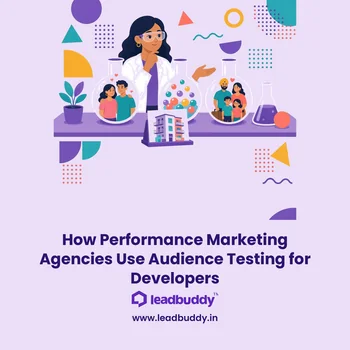
How Performance Agencies Test Buyer Audiences for Developers
When a developer asks me "who should we target?", my honest answer is usually: "We have a good guess, and we'll test it." Audience testing is one of the most useful things a performance agency does, and it's often misunderstood.
Why isn't guessing your buyer enough?
Every project has a target buyer on paper. The brochure says "young families" or "upgraders from older buildings." That's a fine starting point. But real buyers often surprise you. A project we'd assume suits young couples might pull strong interest from parents buying for grown children.
A tower pitched to upgraders might attract investors instead. Testing helps you find out, quickly and cheaply, before you commit most of the budget.
Which audiences do performance agencies actually test?
We usually test geography, interests and behaviours, lookalike or similar audiences built from past buyers, search intent through different keyword themes, and life stage where platform rules allow it. We don't test everything at once, because spreading a small budget too thin teaches you nothing useful.
Audience testing isn't one thing. On digital platforms, we usually test across a few dimensions:
- Geography. Nearby suburbs, wider city, specific pin codes, NRI markets.
- Interests and behaviours. Property interest, home loans, upgrading signals.
- Lookalike or similar audiences. Built from past buyers or high-quality leads.
- Search intent. Different keyword themes on Google.
- Life stage. Where platforms allow it, and within their policy rules.
That just spreads money too thin to learn anything.
How does a fair audience test work?
A fair test changes one variable at a time, gives each audience enough budget and enough time to produce real data, and judges the winner on site visits or qualified leads rather than clicks. That last rule matters most, because cheap leads can hide audiences that never visit.
A good test needs a few basics:
- One variable at a time. Change the audience, keep the ad and landing page the same.
- Enough budget. Each audience needs enough spend to produce real data.
- Enough time. A few days isn't usually enough for property.
- The right success metric. Site visits or qualified leads, not just clicks.
That last one matters most. An audience might give cheap leads and zero visits. Another might give fewer leads but much better ones.
| Test rule | Why it matters | Common mistake |
|---|---|---|
| One variable at a time | You know what caused the result | Changing ad and audience together |
| Enough budget per audience | Each group produces real data | Spreading money across too many groups |
| Enough time | Property buyers take longer to act | Calling a test after three days |
| Right success metric | Visits show real intent | Judging only on cost per lead |
A hypothetical example
Say you're launching a 2 and 3 BHK project in Powai. The agency sets up three audiences: local renters likely to buy, upgraders from nearby older societies, and NRIs in the Gulf with Mumbai links.
After a few weeks, pre-sales feedback shows the NRI audience brings fewer leads but a good share of serious conversations, often family members in Mumbai visiting on their behalf. Local renters bring lots of leads but many are early in their search.
The agency doesn't just kill the renter audience. It moves it to a longer nurture path and shifts more budget to upgraders and NRIs for the launch push. That's audience testing doing its job.
Why test creative alongside audiences?
Different audiences often respond to different messages. Upgraders might care about bigger rooms and better amenities. NRIs might care about the developer's delivery track record and remote booking support. First-time buyers might care about EMI comfort and connectivity. Once we know which audiences matter, we test messaging for each.
That's usually where the next jump in performance comes from.
Which audience testing mistakes are most common?
The common ones are calling a test after three days, changing ads and audiences together so you can't see what worked, judging only on cost per lead, and never retesting. An audience that failed at launch can work later in the sales cycle, and the reverse happens too.
I see these again and again:
- Calling a test after three days because one audience looks "bad."
- Changing ads and audiences at the same time, so you can't tell what worked.
- Judging only on cost per lead.
- Never retesting. Audiences that failed at launch can work later, and vice versa.
Which privacy and platform rules apply to audience testing?
Tests have to stay inside platform policies and data privacy rules. Housing ads face special restrictions on some platforms, and targeting by certain personal characteristics isn't allowed. A serious agency knows these limits, plans within them, and explains to you which options are off the table and why.
Any serious agency will know these limits and plan within them.
What should you ask your agency about audience tests?
Ask which audiences they'll test first and why, how long each test will run, which metric decides the winner, and how they'll share results with you. A good Google Ads specialist should also explain how they'll test keyword themes, not just audiences on social platforms.
If you're working with a performance marketing agency for real estate developers, ask:
- Which audiences will you test first, and why?
- How long will each test run?
- What metric decides the winner?
- How will you share results with us?
And a full-service real estate marketing partner should connect audience findings to creative changes.
If you're weighing the cost of hiring a real estate digital marketing company, testing discipline is one of the things you're really paying for.
How long before audience tests show results?
In my experience, the first round of audience tests gives you direction within a few weeks, but the real picture forms over two or three months as site visits and bookings come in. Bookings lag leads, sometimes by a long way.
So we treat early results as signals, not verdicts, and keep a small budget aside for fresh tests even once the main audiences are settled.
The best ROI real estate marketing agencies treat testing as an ongoing habit rather than a launch-week activity. Markets shift, competitors arrive and buyer moods change with interest rates. An audience that worked in spring may need a rethink by the festive season.
Why is audience testing worth the unglamorous work?
Audience testing turns assumptions into evidence. It isn't glamorous, but it's where a lot of wasted spend gets saved, because you stop putting money behind the brochure's guess and start putting it behind the groups who actually visit. Start early, keep tests fair, and revisit as the market changes.
If you'd like to plan audience tests for your next project, book a free strategy call with the LeadBuddy team.
Key takeaways
- The brochure's target buyer is a hypothesis to test, not a fact.
- Change one variable at a time and give each audience enough time and budget.
- Pick winners on site visits or qualified leads, not clicks.
- Weak audiences can move to a nurture path instead of being switched off.
- Retest audiences as markets, rates and competition change.
Frequently asked questions
What is audience testing in real estate performance marketing?
It means running the same offer to different buyer groups and comparing results, so you learn who actually responds before committing most of the budget. Groups might differ by geography, interests, search intent or similarity to past buyers. The winner is judged on visits or qualified leads.
How long should an audience test run for a housing project?
Longer than a few days. Each audience needs enough budget and time to produce meaningful leads and early visits. Direction often appears within a few weeks, but the full picture forms over two or three months as bookings arrive.
Which metric should decide the winning audience?
Site visits or qualified leads, not clicks or cost per lead. One audience can give cheap leads and no visits, while another gives fewer but better leads. The second is usually the real winner.
Why can't we just target the buyer described in the brochure?
Because that description is a guess. A project pitched to young couples may draw parents buying for grown children, or investors instead of upgraders. Testing finds out quickly and cheaply.
Which audiences are usually tested first?
Commonly nearby suburbs versus the wider city, NRI markets, property and home-loan interests, and lookalike audiences built from past buyers. On Google, different keyword themes act as intent tests. The order depends on the project and budget.
Why should only one variable change in a test?
If you change the audience and the ad together, you can't tell which one caused the result. Keep the ad and landing page the same while comparing audiences. Then test creative separately.
Should a weak audience be switched off straight away?
Not always. An audience early in its search may suit a longer nurture path rather than the launch push. Moving it instead of killing it keeps future buyers in the pipeline.
How do NRI audiences tend to behave in audience tests?
They often bring fewer leads but serious conversations, sometimes through family members in India who visit on their behalf. Judge them on visits and booking conversations rather than volume. Messaging about delivery track record and remote booking support often matters.
Why test creative once the audiences are known?
Different groups care about different things. Upgraders may want bigger rooms, NRIs may want delivery history, and first-time buyers may want EMI comfort and connectivity. Matching messages to each group is often where the next improvement comes from.
Are there targeting rules for housing ads?
Yes. Some platforms restrict housing ads, and targeting by certain personal characteristics is not allowed. Data privacy rules apply too. A serious agency plans tests within those limits and tells you what is off the table.
How often should audiences be retested?
Regularly, not only at launch. Markets shift, competitors arrive and interest rates change buyer moods. An audience that worked in spring may need a rethink by the festive season.
What should my agency show me after an audience test?
Which audiences were tested, how long each ran, how much was spent, and how each performed on leads, qualified leads and visits. It should also say what it will change next. A short summary is better than a long screenshot deck.
Do audience tests work differently for a Powai project than one in Navi Mumbai?
The method is the same, but the groups differ. A Powai project may pull upgraders and NRIs with Mumbai links, while a Navi Mumbai project may draw families moving from rented flats. Local knowledge shapes which audiences are worth testing first.