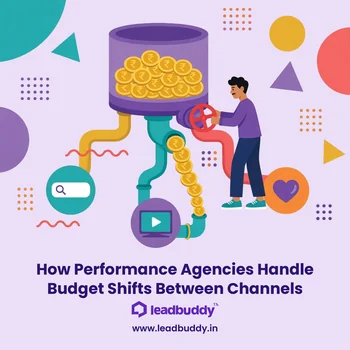
When to Move Spend Across Search, Social and Video
One of the questions I get most from developers is, "Why did you move money out of Meta this week?" Or Google, or YouTube. Budget shifts can look random from the outside. They shouldn't be. Here's how we think about moving money between channels, and what you should expect from any agency doing it for you.
Why shouldn't channel budgets stay fixed?
Some developers like to lock a channel split at the start: so much for Google, so much for Meta, so much for portals. I understand the appeal. It's tidy and easy to approve. The problem is that buyer behaviour doesn't stay fixed.
A channel that's brilliant in launch month can get expensive by month three. A competitor can start bidding on your keywords. An ad can tire out. If the budget can't move, you end up paying more for less.
What actually triggers a budget shift?
A shift is usually triggered by a noticeable change in cost per site visit over a couple of weeks, clear lead quality feedback from pre-sales, seasonality, inventory changes such as a unit type selling out, or a new test that needs budget. Cost per lead alone is a warning light, not a decision.
We don't move money on a whim. Usually it's one of these:
- Cost per site visit changes noticeably on a channel over a couple of weeks.
- Lead quality feedback from pre-sales points clearly in one direction.
- Seasonality. Festive periods, monsoon slowdowns and year-end pushes all change behaviour.
- Inventory changes. If 2 BHKs are nearly sold out, the campaigns pushing them should slow down.
- New tests that need some budget to prove themselves.
Note that cost per lead alone isn't on that list.
How big should a budget shift be?
In my experience, small and steady works better than big and sudden. Platforms' algorithms need time to settle after budget changes. Cutting a campaign by most of its budget overnight can throw it back into a learning phase and make results messy for days.
So we usually shift in steps, watch what happens and shift again if the data holds up.
A hypothetical example
Picture a developer running campaigns for a project in Chembur. For the first month, Meta lead forms and Google search split the budget fairly evenly.
By week six, pre-sales notes that search leads are visiting far more often, while Meta leads are increasingly hard to reach. The agency doesn't cut Meta overnight. It moves a slice of budget to search, tightens Meta targeting and switches Meta from instant forms to a landing page with a slightly longer form. Two weeks later, the team reviews again and decides on the next step.
Meta doesn't disappear. Its role changes from lead machine to a mix of remarketing and awareness, which suits it better for this project.
Why do different channels need different jobs?
Google search catches people who are already looking, Meta and Instagram create interest and remarket to warm audiences, YouTube builds familiarity and trust, and property portals reach active searchers but often share leads with competitors. Shifting money is really about which job matters most right now.
It helps to remember that channels aren't interchangeable:
- Google search catches people who are already looking.
- Meta and Instagram create interest and remarket to warm audiences.
- YouTube builds familiarity and trust, especially for new developer names.
- Property portals reach active searchers but often share leads with competitors.
Shifting money between them isn't just a numbers game.
| Channel | Main job | Typical shift signal |
|---|---|---|
| Google search | Catch active buyers | Visit rate rises or falls on key terms |
| Meta and Instagram | Create interest, remarket | Leads hard to reach or quality drops |
| YouTube | Build familiarity and trust | Branded search trends |
| Property portals | Reach active searchers | Shared leads and low visit rates |
How should an agency communicate budget shifts?
A budget shift should never surprise you. A good agency will tell you what it's moving, why and what it expects to happen. A short note in the weekly update is enough. If your agency moves large sums without explanation, ask for that note.
And if they never move budget at all, ask why not.
Who decides on a budget shift?
We usually agree on a rule at the start: small shifts within an approved total can be made by the agency; larger changes or increases in total spend need the developer's sign-off. That keeps things flexible without anyone feeling blindsided.
What should you look for in a partner that shifts budgets?
A performance marketing agency for real estate developers should be comfortable explaining shifts using visit and booking data. A real estate PPC management company will naturally focus on search, so ask how they'd coordinate with whoever runs your social. A full-service real estate marketing partner can make cross-channel decisions more smoothly because they see everything.
If you're comparing real estate lead generation agency pricing, check whether fees are tied to a particular channel's spend. That can quietly discourage an agency from moving money away from where it earns more.
What is the bigger picture on budget flexibility?
The best ROI real estate marketing agencies treat budget as something that flows toward results. Not stuck in a spreadsheet from three months ago. That flexibility, used carefully, is one of the main reasons digital marketing can outperform older, fixed media plans.
If you'd like a second opinion on how your current budget is split, book a free strategy call with the LeadBuddy team.
We run LeadBuddy out of Mumbai, so much of our day-to-day work is in Mumbai, Thane and Navi Mumbai, but the questions above hold for any city.
Key takeaways
- Fixed channel splits ignore how quickly buyer behaviour changes.
- Shift budget on cost per visit and sales feedback, not cost per lead alone.
- Move money in steps so ad platforms don't restart learning.
- Each channel has a different job, so a shift can change a role, not end it.
- Agree who approves which size of shift before the launch.
Frequently asked questions
Why do performance agencies move budget between channels?
Because buyer behaviour changes. A channel that works in launch month can get expensive by month three, competitors start bidding and ads tire out. Moving money towards what produces visits keeps spend working.
What should trigger a budget shift?
A sustained change in cost per site visit, clear lead quality feedback from pre-sales, seasonality, inventory changes and new tests that need budget. Cost per lead alone shouldn't trigger a move. It is a warning light.
Should budget shifts be big or gradual?
Usually gradual. Ad platforms need time to settle, and cutting a campaign sharply overnight can push it back into a learning phase. Shift in steps, watch and shift again if the data holds.
Why not lock a fixed channel split at the start?
It is tidy and easy to approve, but it ignores how quickly results change. If budget can't move, you end up paying more for less. Agree a total and let the split flex within rules.
How does inventory affect channel budgets?
If one unit type is nearly sold out, campaigns pushing it should slow down. Budget then moves to the inventory you still need to sell. The agency needs regular inventory updates to do this well.
What role does each ad channel play for developers?
Google search catches active buyers, Meta and Instagram build interest and remarket, YouTube builds trust, and portals reach active searchers but often share leads. Shifts are really about which job matters most right now.
Does moving budget away from Meta mean Meta failed?
Not necessarily. Its role may change from lead generation to remarketing and awareness, which can suit a project better. The channel stays, but with a different job.
Who should approve budget shifts?
A simple rule works well: small shifts within the approved total are the agency's call, while larger moves or increases in total spend need the developer's sign-off. Write this into the agreement.
How should an agency tell me about a budget shift?
A short note in the weekly update saying what moved, why and what it expects to happen. A shift should never be a surprise. If large sums move without explanation, ask for that note.
What if my agency never moves budget at all?
Ask why. It may be a sign the account isn't being actively managed, or that fees are tied to one channel's spend. Fixed budgets for months usually mean missed opportunities.
Can agency fee structures discourage budget shifts?
Yes. If fees are a share of spend on a particular channel, there is a quiet incentive to keep money there. Check fee structures when comparing agencies.
How do festive seasons and monsoon affect channel budgets?
Buyer behaviour changes around festive periods, the monsoon slowdown and year-end. Budgets may move towards high-intent search during festive pushes and towards nurture during quieter months. Plan these shifts ahead rather than reacting late.
Is a full-service partner better at cross-channel budget decisions?
It can be, because it sees all channels together. A search-only specialist should explain how it coordinates with whoever runs social. Either way, someone must look at the whole mix.